
PU Flooring vs Epoxy Flooring: What Is the Cost Difference?
When planning industrial flooring for a factory, warehouse, pharmaceutical facility, or manufacturing unit, one of the most important decisions is choosing between polyurethane (PU) flooring and epoxy flooring.
Both systems can provide a seamless, durable, and easy-to-maintain surface. However, they differ in material properties, installation requirements, performance, and initial cost.
So, which is more expensive: PU flooring or epoxy flooring? In general, PU flooring costs more upfront than standard epoxy flooring. The final price depends on the flooring system, thickness, concrete surface condition, chemical exposure, traffic intensity, and installation requirements.
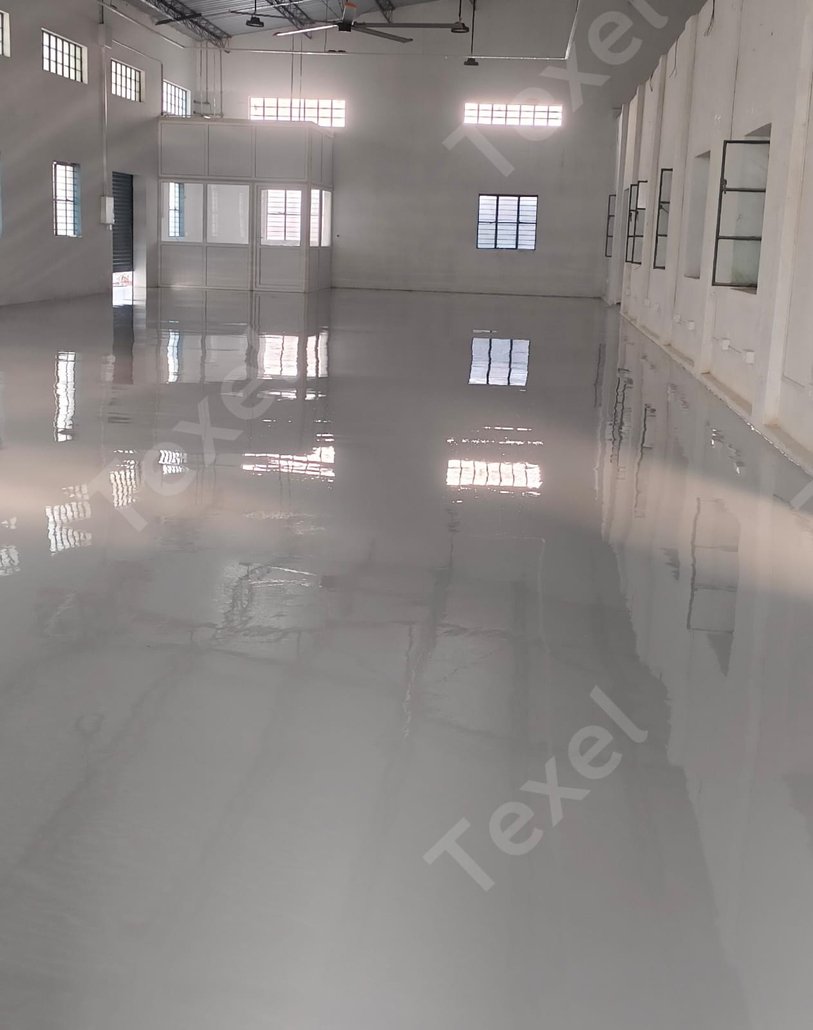
EPOXY FLOORING
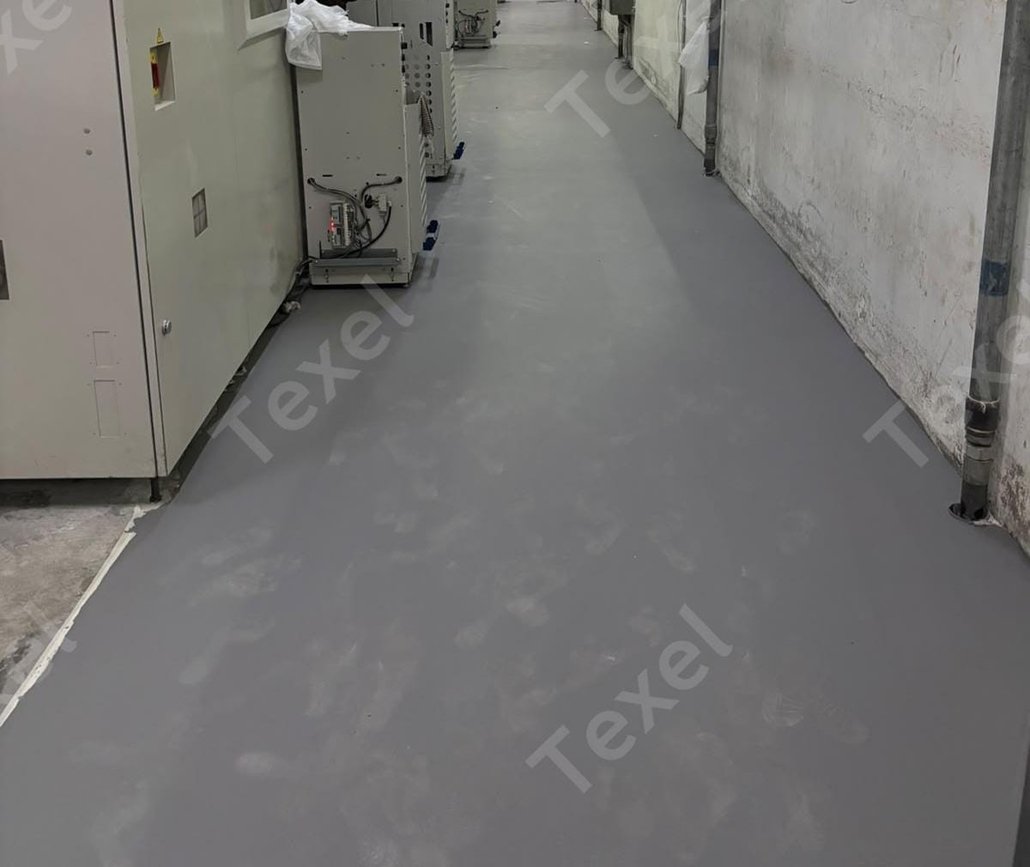
PU FLOORING
1. What Is the Cost of PU Flooring and Epoxy Flooring in India?
Industrial flooring prices vary because a basic floor coating and a heavy-duty industrial flooring system are not equivalent
products. The following are broad indicative price ranges for common industrial flooring systems in India
| Flooring system | Indicative cost per sq. ft. |
| Basic epoxy coating | ₹35-85 |
| Self-levelling epoxy flooring | ₹42-150 |
| Industrial PU flooring | ₹86-160 |
These figures are indicative market estimates, not a quotation from Texel Agency. Actual prices may fall outside these ranges depending on specification, location, project size, and site conditions. The table is intended for preliminary budgeting. A fair comparison requires matching flooring thickness, surface preparation, performance requirements, and installation scope.
Cost example for a 1,000 sq. ft. area
| Flooring type | Assumed rate | Estimated total |
| Self-levelling epoxy | ₹100/sq.ft | ₹1,00,000 |
| Industrial PU flooring | ₹150/sq. ft. | ₹1,50,000 |
| Difference | ₹50/sq. ft. | ₹50,000 |
This is a hypothetical budgeting example, not a current market quotation. It assumes comparable installation scopes. Surface
repairs, taxes, and other exclusions must be checked separately.
2. What Is the Cost Difference Between PU Flooring and Epoxy Flooring?
For a basic comparison, consider a standard industrial epoxy system priced at ₹85–₹150 per sq. ft. and an industrial PU system priced at ₹120–₹200 per sq. ft. These illustrative ranges indicate that PU flooring may have a higher initial installation cost. The difference is not fixed: some specialised epoxy systems can cost as much as, or more than, certain PU systems.
The final price depends on the performance requirements of the floor.
3. Why Is PU Flooring Often More Expensive Than Epoxy Flooring?
A. Flexibility and impact performance
Many PU systems offer greater flexibility than conventional epoxy systems. Depending on the formulation, this can help them accommodate certain stresses and impacts. Performance depends on the selected product, thickness, and substrate.
B. Temperature resistance
Specialised polyurethane cement flooring systems can be suitable for environments involving hot-water cleaning, temperature fluctuations, and thermal shock. These systems are often used in food processing facilities, commercial kitchens, and selected industrial environments.
C. Wet-processing environments
Facilities that experience frequent washdowns or demanding cleaning procedures may benefit from a suitably specified PU
flooring system. Not every PU product is designed for these conditions.
D. Specialised materials and installation
Heavy-duty PU screeds and polyurethane cement systems can require more material, specialised installation procedures, and
specific thicknesses. These requirements can increase the initial project cost.
Important: PU flooring is not automatically better than epoxy flooring. Each system must be evaluated according to the facility’s actual operating conditions.
4. What Factors Affect PU and Epoxy Flooring Costs?
Flooring thickness: Thicker systems generally require more material and may involve additional application work. A thin epoxy coating should not be compared directly with a heavy-duty PU screed.
Concrete surface preparation: Grinding, shot blasting, crack repairs, removal of old coatings, and moisture-related treatment can add to the project cost.
Total flooring area: Large projects may benefit from economies of scale, while smaller projects may have higher
per-square-foot setup costs.
Chemical resistance: Facilities exposed to oils, cleaning chemicals, acids, alkalis, or solvents may require specialised
systems.
Anti-slip and safety requirements: Textured finishes, aggregate broadcasting, safety markings, and specialised finishes may increase cost.
Installation time and downtime: Curing time, application procedures, and return-to-service requirements can influence the total project cost.
Location and site access: Transport, labour availability, equipment access, and site restrictions can affect the final quotation.
For an accurate comparison, request a written quotation that specifies the material system, thickness, surface preparation, number of layers, and exclusions.
5. PU Flooring vs. Epoxy Flooring: Which Is More Cost-Effective?
The most cost-effective flooring solution is the one that meets the facility’s requirements without unnecessary installation or
maintenance expenses.
| Requirement | Epoxy flooring | PU flooring |
| Initial cost | Generally lower for standard systems | Generally higher for comparable specialised systems |
| Dry warehouses | Often suitable | May be suitable depending on requirements |
| Frequent hot-water cleaning | Standard systems may be unsuitable | Specialised systems may be suitable |
| Thermal shock | Requires careful system selection | Specialised PU cement systems can perform well |
| Chemical resistance | Depends on formulation | Depends on formulation |
This is general guidance, not a universal rule. Actual performance depends on the complete flooring specification and site
conditions.
When should you choose epoxy flooring?
- The facility operates mainly under dry conditions.
- The floor needs a hard, seamless, easy-to-clean surface.
- The budget favours a conventional resin flooring system.
- Operating temperature and chemical exposure are compatible with the selected epoxy.
- Expected traffic and loads are within the system’s capabilities.
Typical applications include warehouses, workshops, manufacturing areas, and selected pharmaceutical or electronics facilities.
When should you choose PU flooring?
- The facility experiences frequent washdowns.
- Temperature fluctuations or thermal shock are important concerns.
- The operation involves demanding hygiene requirements.
- The selected system must meet specific flexibility, impact, or chemical-resistance requirements.
- The extra upfront investment is justified by the required performance.
Typical applications include food processing facilities, commercial kitchens, selected pharmaceutical plants, and demanding
industrial processing areas.
6. Is PU Flooring Worth the Extra Cost?
PU flooring can justify its higher initial cost when the facility requires performance characteristics that a standard epoxy system cannot reliably provide. Installing an unsuitable epoxy system in a hot washdown area may lead to premature deterioration, repairs, operational disruption, or replacement costs.
However, in a dry warehouse where a suitable epoxy system performs reliably, paying extra for PU flooring may not deliver a meaningful benefit.
To compare long-term value, consider:
- Initial installation cost
- Expected service life under actual operating conditions
- Routine maintenance requirements
- Repair and recoating expenses
- Production downtime during repairs
- Cost of premature flooring failure
A higher installation price does not automatically mean a lower lifetime cost. Compare systems designed for the same operating
7. How Can Businesses Reduce Industrial Flooring Costs?
– Select the correct system: Avoid paying for specialised features the facility does not need.
– Prepare the concrete properly: Good surface preparation helps reduce adhesion failure and premature repairs.
– Compare equivalent quotations: Ensure contractors quote for the same thickness, layer build-up, and preparation scope.
– Assess the complete project cost: Consider materials, labour, repairs, taxes, curing time, and operational downtime.
– Plan maintenance: Regular cleaning and timely repairs can help preserve floor performance.
– Consult an industrial flooring specialist: A site assessment can help identify the system that best matches the facility’s
requirements.
8. Why Choose Texel Agency for Industrial Flooring?
Choosing industrial flooring requires an understanding of the concrete substrate, traffic conditions, chemical exposure,
temperature requirements, and long-term maintenance needs.Texel Agency offers industrial flooring solutions, including epoxy flooring, PU flooring, ESD and antistatic flooring, VDF flooring, concrete polishing, and other industrial and commercial flooring solutions. Our aim is to help businesses identify suitable flooring systems for their operational requirements. Before making a decision, discuss your floor area, existing concrete condition, expected traffic, and exposure to chemicals or temperature changes with a qualified flooring professional.
Frequently Asked Questions (FAQs)
Can I get an exact industrial flooring cost without a site inspection?
A preliminary estimate may be possible from the floor area and project requirements. A reliable quotation usually requires an assessment of concrete condition, preparation work, system specification, and site access.
Which is cheaper, PU flooring or epoxy flooring?
Standard epoxy flooring is generally cheaper upfront than comparable specialised PU flooring systems. Actual costs depend on the system, thickness, surface preparation, and installation requirements.
What is the cost of epoxy flooring per square foot in India?
Indicative rates for common industrial epoxy systems can range from approximately n45 to n150 per sq. ft. for basic coatings and self-levelling systems. Heavy-duty and specialised systems can cost more.
What is the cost of PU flooring per square foot in India?
Some industrial PU flooring systems may fall within approximately n120–n300 per sq. ft. depending on the system and
installation scope. These figures are planning estimates, not a fixed quotation.
Does PU flooring last longer than epoxy flooring?
Not in every situation. The service life of either system depends on formulation, thickness, installation quality, traffic, temperature, chemical exposure, and maintenance.
Which flooring is better for factories?
Epoxy flooring is often suitable for dry manufacturing areas and warehouses. Specialised PU flooring may be better suited to certain hot, wet, or demanding processing environments.
Conclusion
The cost difference between PU flooring and epoxy flooring depends on the type of system being compared. Standard epoxy
flooring is generally more economical upfront, while specialised PU flooring can offer advantages in demanding environments involving temperature changes, wet cleaning, and particular industrial requirements.
The best approach is to compare the full flooring specification rather than the price alone.
PLANNING INDUSTRIAL FLOORING?
Contact Texel Agency to discuss your factory, warehouse, or manufacturing facility requirements.
Phone: 90478 04933 / 95970 64434
Email: texelagency@gmail.com
Texel Agency — Striving For Mutual Excellence.



Leave a Reply
Want to join the discussion?Feel free to contribute!